Do You Really Need Race Truck Parts on Your Daily Driver?
Trophy trucks get torn down and rebuilt after every race. Suspension, joints, axles. Race truck parts that get serviced or replaced before the truck rolls to the next starting line. Your daily driver does not get that treatment. That gap between race maintenance schedules and real-world ownership is where most bad off-road parts decisions happen.
I learned this firsthand on the Trailhunter after months of living with chromoly steel heim joint rear suspension links, chasing noises, and eventually pulling them off in my driveway. Here is the full breakdown of what happened, what I replaced them with, and why 98% of off-road truck owners probably do not need race truck parts.
Why chromoly steel heim joint suspension links fail on daily drivers
Early in this build I upgraded the stock Toyota rear suspension links to a set of chromoly units with heim joints. They came from a local Phoenix area fabricator who had a background building parts for race trucks. On paper it made perfect sense. Stronger material, tighter tolerances, metal-on-metal joints with zero give. Exactly the kind of parts that perform on a race course.
Fabrication took months longer than quoted. Other customers waited over six months. Some never received their parts and had to fight for refunds. I have seen this pattern before with fabricators who work for established shops and then branch out on their own. Running a business is difficult, and I respect anyone who tries. But the experience was rocky for a lot of people. I will not name the individual or the company here. If you are curious, scroll through my Instagram and you can follow the progression.
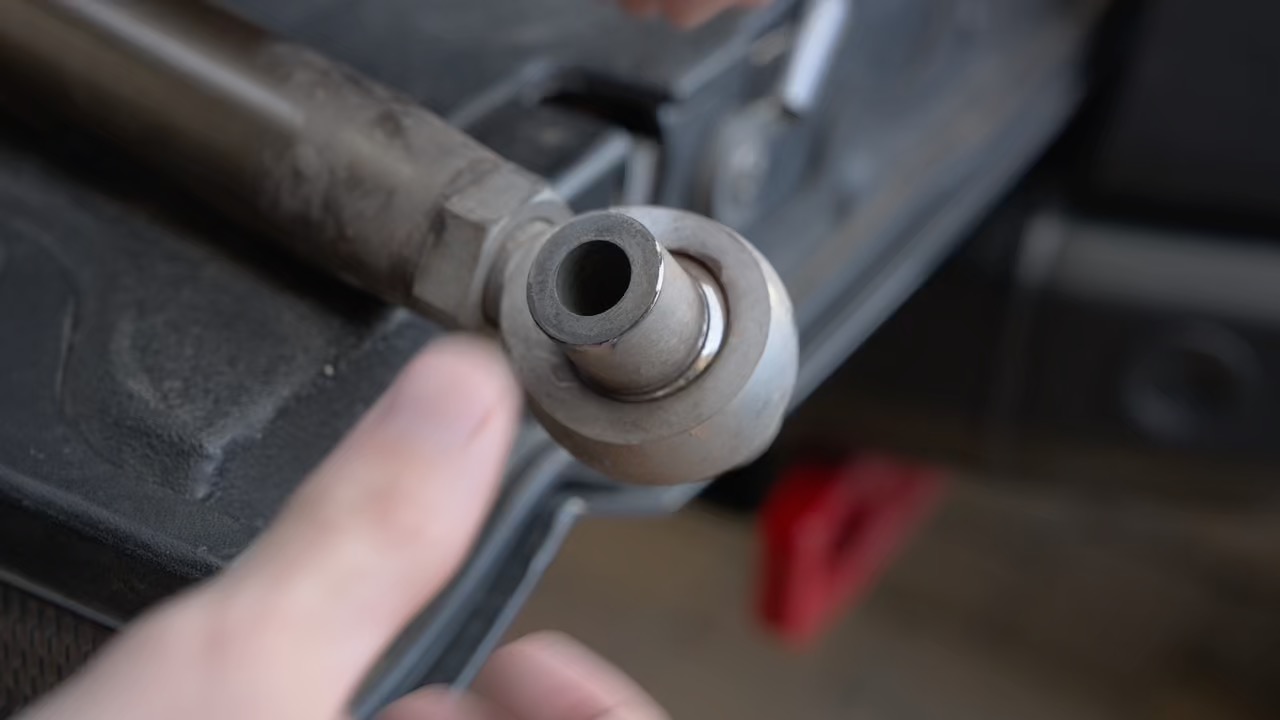
First impressions were positive
Install happened in the fabricator’s garage in the Arizona heat. It took longer than expected, but once the links were on the truck felt noticeably different. Corners were tighter. That vague, sloppy feel from the stock links was gone. Immediately, the truck felt planted. I drove it hard and did not think twice about the decision.
What I did not realize at the time is that as an early purchaser, even at a discounted or sponsored rate, you are the testing program for the fabricator. There was no formal R&D cycle. No extended testing period. You buy it, you bolt it on, and you find the problems.
Clunking Started Within Months
After several months of hard wheeling the truck started shifting during acceleration and deceleration. Sharp turns on pavement produced a loud clunk, like the rear end was trying to move laterally but something was binding and then releasing. Arizona’s wet season amplified every noise. Every bump produced banging and shifting over obstacles on the trail and again when making turns on the street.
Heim joints require regular maintenance. That is a known trade-off and several people warned me about it going in. Dry lube helped with some of the noise. But the shifting, the clunking during hard turns, and the general feeling that something was not right never fully went away.
What a race truck shop actually found
My buddy Jay, who runs a built long-travel 3rd gen Tundra, connected me with Tyler at Arizona Chassis Engineering. Tyler spent years at ADS before going out on his own. He builds and services actual race trucks for a living. He knows exactly what race truck parts are designed to do and who they are designed for.
I booked time and pulled into his shop. His assessment was immediate.
Heim joints on the upper rear links had zero give. A heim joint is metal on metal. There is no compliance in the joint itself, which means every vibration from every trail impact and road imperfection transmits directly into the chassis at the mounting points. That is the noise. That is the harshness. Each joint is doing exactly what it was designed to do, but on a daily driver that never gets torn down, the result is a truck that rides like a race truck and sounds like one too. Tyler summed it up in one sentence: “Race truck parts make race truck noises.”
That part I could accept. What I could not accept was the finding that some heim joints were already loosening after just a few hundred miles, even after being torqued to spec. Heim joints are exposed. They collect dirt, moisture, and road salt. Without regular cleaning and lubrication they bind up and wear prematurely. That is a maintenance schedule most daily driver owners are not going to follow.
Tyler recommended swapping at least the upper rear links back to stock rubber bushings before I headed to King of Hammers. I pulled the aftermarket uppers and reinstalled the OEM links in my driveway the week before we left. His advice was spot on.
74Weld billet links with flex joints: built for real trucks
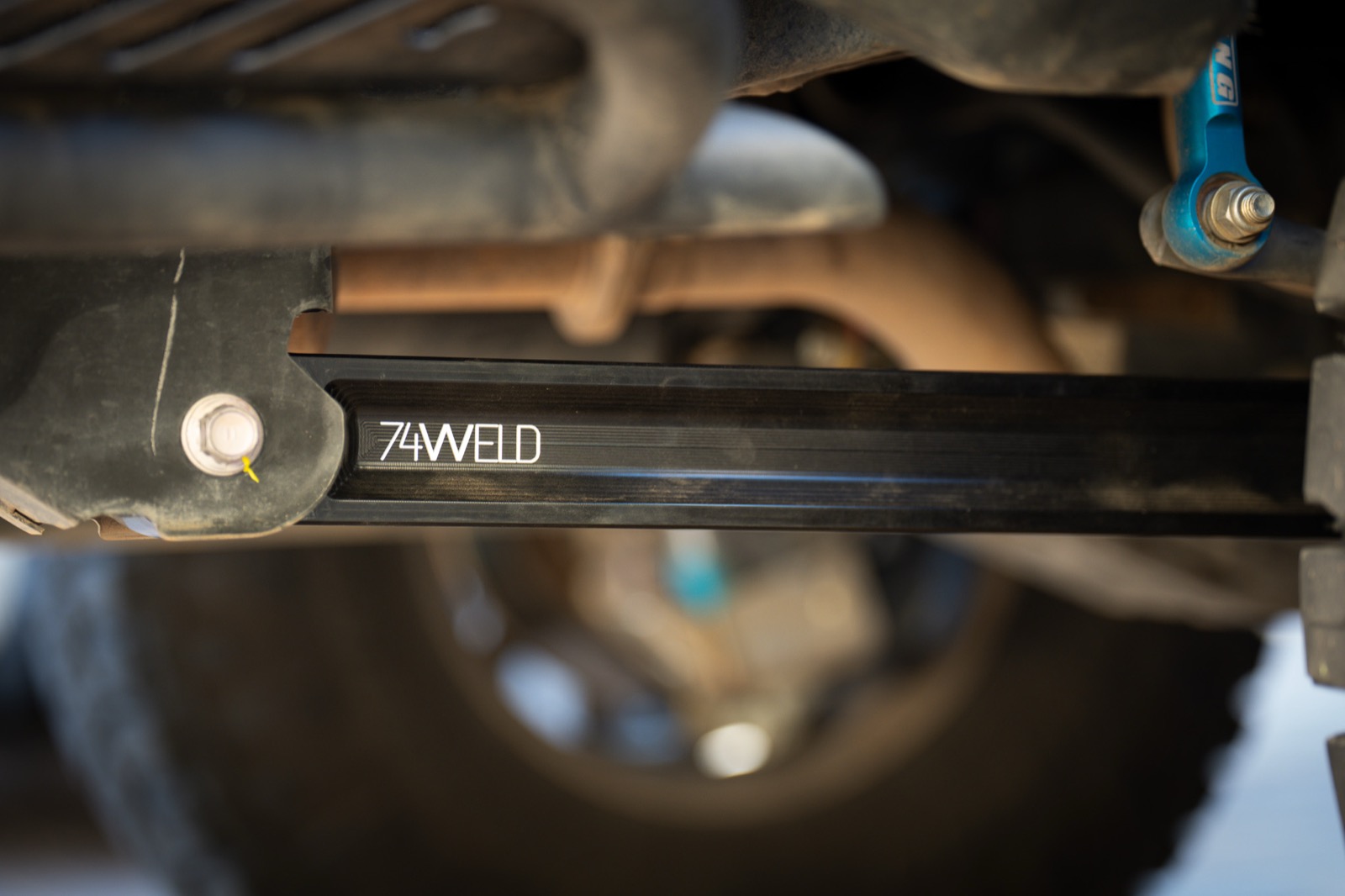
I have been working with Quinn and Kristian at 74Weld on the portals and wheels for this build. Quinn’s YouTube channel is one of the best educational resources in the off-road space. Decades of experience in aerospace engineering and years building trophy trucks and Ultra4 cars, all distilled into practical advice for people modifying real trucks.
We share a core belief that most truck owners in the off-road community need to hear: most people do not need race truck parts.
Trophy trucks that everyone wants to model their builds after get rebuilt between races. Suspension, axles, joints. Everything gets torn down and serviced on a schedule that no daily driver owner would commit to. It is the same disconnect you see in the gym when someone trains like a professional bodybuilder. Admirable goal. But the application, recovery schedule, and support infrastructure are completely different.
What makes the 74Weld links different
74Weld builds bolt-on billet rear lower links, upper links, and a billet rear track bar that use rock crawler flex joints with vulcanized rubber. Key difference from heim joint setups is straightforward:
- Near-zero maintenance. Vulcanized rubber joints are sealed and protected. No greasing, no dry lube, no cleaning dirt and moisture out of exposed joints every few hundred miles.
- Vibration isolation where a daily driver needs it. Rubber absorbs impact energy at the chassis mounting points instead of transmitting it straight through like a heim joint. Less noise, less harshness, less stress on the chassis.
- Billet construction. You still get the strength and rigidity upgrade over stock steel links. Material is not the compromise. Joint type is the upgrade.
- Bolt-on fitment for stock trucks. No cutting, no welding, no permanent modifications.
These are not race truck parts. They are parts designed by people who build race trucks, engineered for the way most of us actually use our vehicles. They handle everything a weekend warrior or serious off-roader would throw at them. And they are a massive step up from stock.
Why I chose SDHQ for the install
After two years of working with off-road shops across the Phoenix area, I have landed on SDHQ in Gilbert, Arizona. I have seen shops forget to torque bolts. I have seen shops miss parts entirely during installs. I have worked with shops that treat scheduling, follow-up appointments, and estimates like loose suggestions. I spent my career at high-intensity software companies on the West Coast where exactness and follow-through are baseline expectations. Lack of professionalism across much of the off-road install industry is genuinely surprising given that these shops work on vehicles that directly impact people’s safety.
SDHQ is the exception. Serena and her crew are always professional, always on time, and always communicative. They handle complex installs correctly the first time. They may cost more than the shop down the street, but they do not cut corners on quality or customer service.
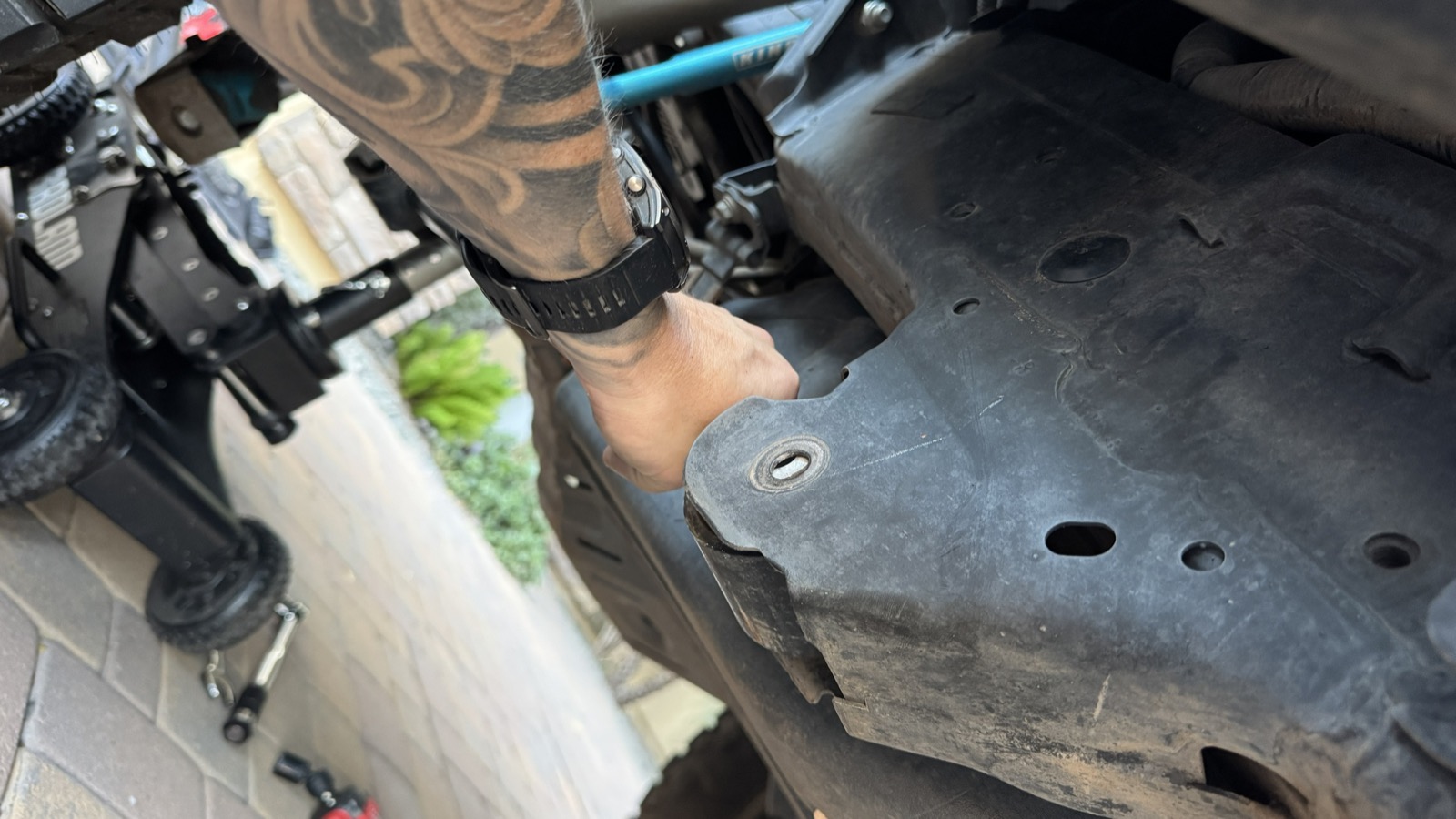
When other shops have dropped the ball, SDHQ picked up the pieces. They handled the 74Weld portal install, shot video, created content, and helped promote the build without me having to ask. My most successful social media posts to date are videos that their team produced. That is next-level service from a shop that understands the value of doing things right.
As a 74Weld authorized dealer, SDHQ was the obvious choice for the link install. It went smoothly. They have a customer for life.
Results After the Swap
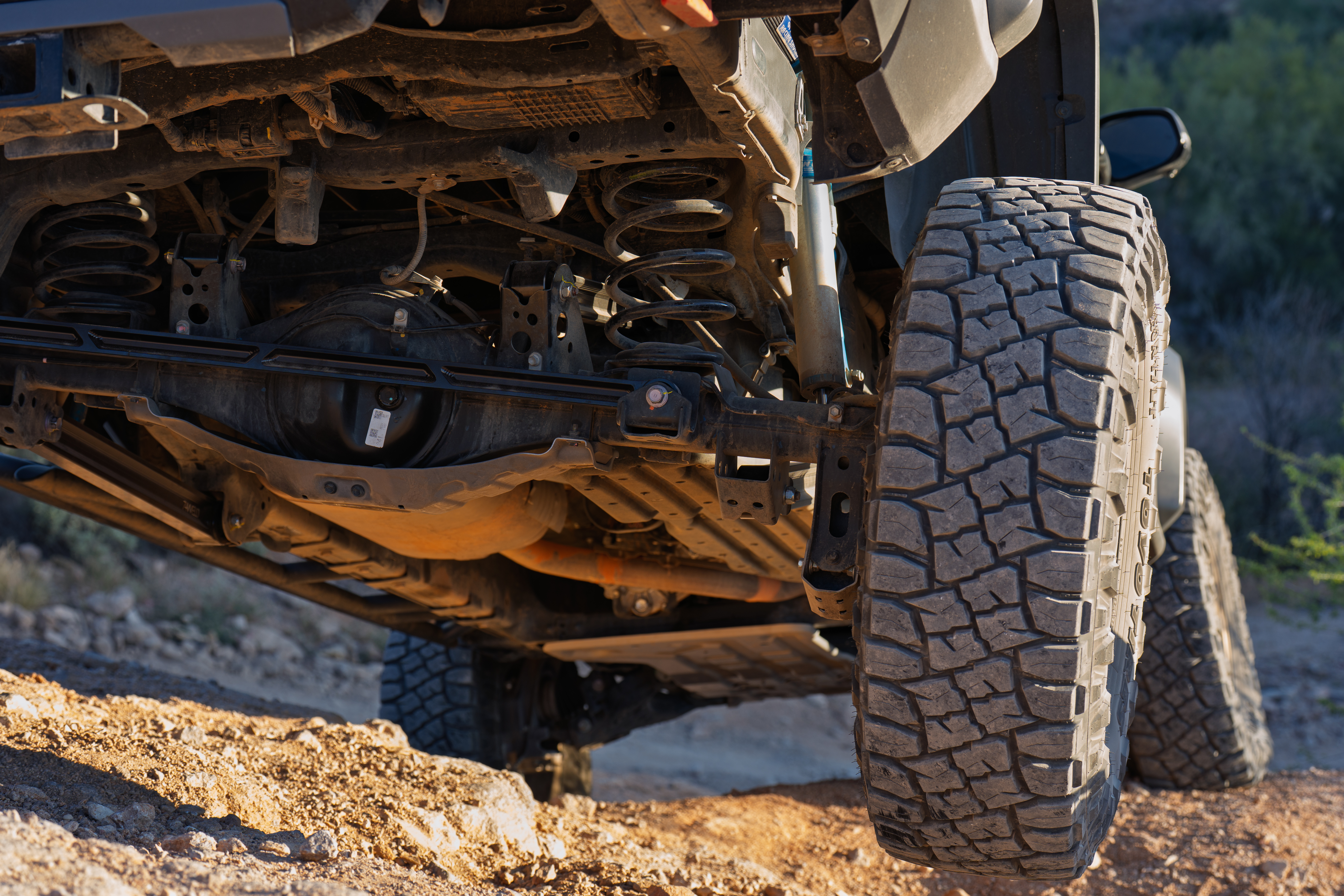
I picked up the 74Weld links at King of Hammers during a camping session with Go Fast Campers above Turkey Claw. With the stock OEM links back on for KOH, the truck felt comfortable but loose at speed across the desert. Not confidence-inspiring when you are running through Johnson Valley.
After SDHQ completed the install, the difference was immediate. Planted feeling from the billet construction is there without the harshness, the lateral shifting, or the constant joint maintenance from the heim joint setup. There was a resonance through the old heim joints that I did not fully appreciate until it disappeared. It vanished the moment those links came off the truck.
I am confident these parts would serve someone building a dedicated race truck that gets regular teardowns and service. But for a daily-driven Tacoma Trailhunter that also sees serious trail use every weekend, the 74Weld flex joint approach is the better solution. We will be pushing these links hard over the coming months. It is prime off-road season in Arizona.
74Weld put together a video that goes over the billet links and the thinking behind using flex joints instead of heim joints:
Portal axles: still the best single upgrade for current-gen Tacomas
While we are on the subject of 74Weld products, I have 15,000 miles on their portal axles and can say without hesitation that this is the single best upgrade I would recommend for any current-gen Tacoma, 4Runner, or Toyota truck. Aside from 5,000-mile oil changes and the initial price tag, the portals have been maintenance-free and have completely changed how this truck performs.
One of Toyota’s biggest misses this generation is the reduced ground clearance that comes with many of these new trucks. That problem compounds with the hybrid turbo four-cylinder powertrain, which needs to be spooled up or in low range to deliver its full torque. A 22% gear reduction at each wheel from the 74Weld portal axles changes that equation completely. Paired with a custom tune from CAM Tuning out of Nevada, this truck feels like a completely different vehicle. A deeper breakdown on tuning is coming in a future post.
Watch Quinn’s videos before you buy anything
Even if you have zero interest in portal axles or any 74Weld product, the 74Weld YouTube channel is worth your time. Quinn draws on decades of aerospace engineering and professional race fabrication to explain the real-world trade-offs of popular off-road modifications. It is free, practical education from someone who has done it at the highest level.
If you are running a current-gen Ford Raptor, pay attention to 74Weld’s Instagram. Something is coming that might surprise a few people.
What Race Parts Cost a Daily Driver
That part you are considering, the one you think will give you more performance and more capability, might not deliver what you expect. Question everything. Understand that every modification comes with trade-offs, and the companies shouting the loudest on Instagram are not always the ones with the best answers.
If you take one thing from this post, let it be this: race truck parts are built for race truck maintenance schedules. If your truck sleeps in the driveway and goes to work on Monday, you probably belong in the 98% that is better served by something smarter than stock but more practical than race-spec.
If you want to see the full build or have questions about any of these parts, the build page has everything and I am always reachable on Instagram. You can also reach out through the contact page.
Full build specs: truck.bdigitalmedia.io/build
Instagram: @portal.hunter
74Weld: 74weld.com
SDHQ: sdhqoffroad.com
Arizona Chassis Engineering: @arizona_chassis_engineering